How Likely Are You to Buy from Yourself – Thinking Like The Customer

Marketing your business has evolved over time. Apart from the traditional methods of marketing, one way to get a proper marketing strategy is by getting into the mind of the consumer. Let us do a little exercise to help do this.
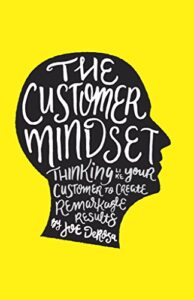
Everyone is familiar with role-playing games. Let’s do a little role play now: You are the customer and you want to purchase an item or service from your franchise. Be completely honest, will you be willing to sanction the purchase? There are a few parameters you can use to evaluate this. Ask yourself the following questions:

Secure Your Space At Africa’s Biggest Education Tradeshow & Conference

  • How easily did I find the product?

  • How does the product compare with other competitors in the market?
  • Is there any benefit from further patronage?
  • How good is the customer service?
  • Does the product keep up with recent technological trends?


The idea of this exercise is to make you understand exactly what the thought process of the consumers is. This will give you a basis to work with a  better strategy.

Reverse-Engineer Your Findings To Your Benefit

After going through the process of getting into the consumer’s mindset, you most likely would find areas where improvements or adjustments can be made. You would find that you would be able to understand your customers better. This will help you to be able to tailor your correspondence to them in the future.

Showcase Your Products & Services at TOSSE 2020

If you can see yourself on the same level as your customers you can better drive customer loyalty and develop the trust that is so important these days and it humanizes your company and enhances your marketing capability. In the end, you will be able to anticipate your customer’s needs because you are thinking just like them. It will put you in the best spot to market with confidence. How likely are you to buy from yourself?

Related Post

Tips for Boosting Business Productivity in 2020


The year 2019 has ended, with it, a decade. Putting the year 2019 under review, there are couple of lessons to be learned when it comes to handling businesses. Below are highlights for boosting your business productivity in 2020.

Some ideas might seem basic at the surface and business owners may tend to ignore them, but these “little things” should not be taken for granted. This brings us to the first tip of having a productive business in 2020.

Know Your Customer

Know your consumer needs and develop products that help satisfy those needs. The all essence of creating a business is to provide solutions to solve other people’s problems.

One big pitfall most businesses have run into is getting comfortable with a routine, forgetting that the tastes of the consumer are ever-changing despite its originally eclectic nature. Business owners should always find a way to tweak already existing products to meet these changing demands. Ever wondered the need for Coke Zero when the normal Coca-Cola was selling by the truckloads?

Identifying consumer needs is not as difficult as it might sound. It takes engaging your consumers in discussions. Encourage them to give feedback on the products. As much as it depends on you, keep your services as personalised as possible. Always acknowledge these comments; it just might encourage them to send another.

Boost and Nurture Customer Relations

Most businesses, if not all, want new customers. But what is a new customer if you lose two of your old ones! Old customers are usually the source of new ones, directly or indirectly. So nurture those old clients.

You can do this by staying in contact with them via different means. Newsletters, emails, text messages – these are just a couple of ways to do this. Try to always make these means of correspondence personalised.

Grow Your Network

Invest time in building your networks. Who you know is more important than what you know. Therefore try to get to meet more people. Attend networking events and do not be hesitant to put your business out there.

Possible benefits of networking include the possibility of customer referrals by word of mouth; it is a form of marketing. Another benefit is that you could get positive ideas on how to further grow your business. If possible, have discussions with your fellow competitors. It almost always pays.

Utilize Social Media

Social media is a powerful tool for businesses. It provides an easy platform to conduct market research, get consumer feedback and even promote and advertise your business. The best part is that it is relatively easier and cheaper to run when compared to other traditional methods, and it undoubtedly yields better results.

As common as social media is, some businesses have overlooked this goldmine. It so happens that some don’t have a social media presence while some others have not gone through the process of growing their brand’s visibility on the network. What this means is that those ventures miss out on prospective clients that are teeming on social media, feeding off scraps. Hence, try to boost your visibility on social media. Take advantage of Brand Influencers, create sponsored ads, grow your following by posting relevant and fun posts, and so on. Your clients are on the timeline.

How to Attract The Media To Your Stand At Trade Shows

The main objective of exhibiting your business at trade shows is capturing leads to acquiring new business and brand awareness. However, attracting the media to your stand is certainly the best way to achieve such objective, but how do you achieve this?

Prepare Media Kit

To get the media to talk about your products, the first thing to do is to provide them with valuable contents. Unless your company is very famous or your news incredibly powerful, journalists won’t spend time searching for information and material to talk about you. You must provide them with everything, make it easy for them.

REGISTER TO ATTEND

What should my Media Kit contain?

A good Media Kit contains the following information:

  • Company introduction
  • Company factsheet (figures, facts, graphs – key elements about your business that make it worth talking about)
  • Company timeline (your historic, major dates and milestones)
  • Major products / services / innovations introduction
  • Bio of the founder / CEO / key employees
  • High-resolution Photos and Logos (a good article always comes with a photo, if you don’t provide it, you risk losing control over your content or losing the article altogether)

The strategy is to always provide something very short to give a quick overview with links to find out, make it easy to grasp your documents within seconds, don’t lose your reader in pages of text.

Build your story

Most companies have no story to tell, hence no PR coverage.

Unless you have some incredible innovation to share or an internationally famous brand, why would people talk about you?

You need to have a story that will captivate your audience.

The story can be about your company and what it stands for or about your CEO or founder on his own journey or unique personality.

VISITOR INFORMATION

Make use of PR (Press Release)

Write a Press Release announcing that you will be exhibiting at the show. Make it bold. Use your story as the backbone of your release and add some suspense into it. Talk about innovation, announcement, exclusive information, etc.

If your press release is boring, don’t even bother publishing it. It would have no impact and would only waste your time. Write something worth reading that makes people (and media) want to come pay you a visit.

Once written, publish your PR and relay it through your own networks (website, Social Media, blog, newsletter, etc.), send it to journalists within your network and invite your partners to help you spread it.

Prepare Question & Answer Forms

You did everything right and some journalists stop by your booth, well done!

Then what?

They start talking to your staff. Your team members have been trained for capturing leads and educating visitors, but do they have a clue on how to handle media? Most probably not.

You will certainly ask them to direct journalists to you, but what if you’re not here or the journalist has no time to wait?

Prepare a Q&A sheet for internal purpose. This sheet should contain the top 10 questions you expect journalists to ask about your business and the “correct” answers your staff should be giving.

Use this document to standardize your numbers (you don’t want a person to claim a number and another one say something different) and make sure everyone is on the same page. Distribute this Q&A document and tell your team to read it and memorize it carefully

YOU ARE READY FOR THE TRADESHOW

HIGHLIGHTS OF TOSSE2018

Beyond Events – The Value of Leads

Exhibitions present opportunities for businesses to sell their products, get in the faces of prospective buyers/clients, and network with other competitors. The benefits of getting your business showcased at an exhibition cannot be overstated.

Rather than focus on only making physical sales, attention should also be given to getting leads for the future. In fact, the number of leads that are gained at an event or exhibition should be seen as a metric to measure the success of that outing. While immediate sales might boost business at that moment and possibly morale, it is these leads that will enable the business grow in the future. Therefore, this part of the exhibition should not be taken lightly.

Apply To Showcase Your Product/Service At Africa’s Biggest Education Trade Show And Conference 

Getting The Leads

People present at an exhibition are either business owners like you, or are (prospective) clients and customers. Identify the latter, that’s the group you are looking for. Most likely, the exhibition has a theme and so you do not really have to worry about trying to identify a particular set of prospective clients. For instance, if you’re part of an exhibition for Education, it is safe to say that most person’s that will be available there will be education-based to some extent, and your product should be relevant to most.

Attracting these leads is another thing. I’d like to break it down into two ways:

Direct marketing involves you walking up to prospective clients to begin a conversation. Advance preparation is required here to know exactly what to say and how to act. Note that it might not be necessary to put forth a business proposal at this stage, the main aim is to establish a relationship such that they are comfortable with you enough to engage in further conversation even after the event.

Dress the part, first impressions matter. Visual marketing requires that you set up an attractive booth that would draw people over. Some have found that using colourful banners, catchy copies and catchphrases, and side attractions draw the attention of the public.

Exhibit At TOSSE 2021

Remember the aim of the effort you’re putting in: to generate leads. Therefore, you would need to be able to get the contact information of these ones you meet. Have a viable system of doing this that would not be awkward or make them reconsider. Now you’ve got these leads, what next?

Following Up On Leads

This is the part that should eventually yield results: sales. This is also the tricky part. There are a few tips that can make this process go smoothly:

  1. Separate your leads. Not all contacts you make will require the same level of correspondence. Some might require immediate and constant communication while others might not need so much. Identify these early and strike as necessary so that you don’t get tagged as too pushy or too nonchalant.
  2. Get in contact early. You do not need to wait for too long to get in contact with these leads. It doesn’t have to be an elaborate call, as little as a “thank you” email or text message can do the trick. This will help impress you and your business in their minds.
  3. Personalise your correspondence. Include personal names of the recipients in emails and text messages. Don’t just push out these messages in bulk, it will sound faux and wouldn’t help boost your stock. For direct phone calls, sound friendly on the phone, and engage in conversation rather than giving mechanical responses read off a handbook.
  4. Be consistent. Sales are usually not made at the first contact. This is where consistency comes in. Make sure to always be in contact if you see the prospects of closing a sale on a lead, whether it immediate or not. Persistence would not mean “spamming” these leads as that would be counterproductive. Create a pattern that works.
  5. Know when to abandon a lost cause. Not all leads will become customers/clients. Identify this on time and save yourself a world of stress. To determine this, check for their ability to make a purchase, their motivation, and their level of influence if they stand as a representative for a business. If you determine that they would not be able to patronise you at the time, you’d be better served striking your blows elsewhere. This doesn’t mean you discard their contacts altogether however. Add it to your database of contacts, they might be customers for another product of yours.

Chasing and closing leads might be tedious, but it is usually worth the effort